Looking for a Westin HDX Alternative? Why BackRack's Original Headache Rack Delivers
If you've been comparing Westin HDX headache racks but want something tougher, easier to install, or designed specifically for real work-truck duty, you're not alone. Many truck owners looking for a Westin headache rack alternative land on BackRack because our Original model tackles the same job—protecting your cab and cargo—but does it with heavier-gauge steel, a louvered design that actually moves air, and a bolt-together install that doesn't require drilling into your bed rails.
We built the Original after hearing from contractors, landscapers, and fleet managers who needed a rack that could take repeated lumber impacts, secure shifting loads, and survive years of UV and road salt without the paint flaking off or the frame going soft. This guide walks through what makes our approach different and whether it's the right fit for your truck.
Steel Gauge and Frame Construction: Where the Two Racks Diverge
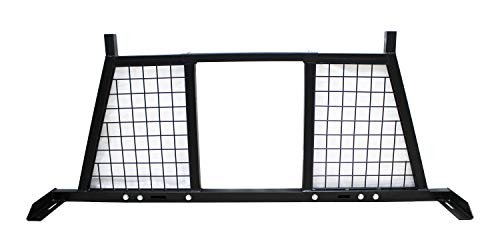
Westin’s HDX uses 12-gauge formed steel, which handles light-duty hauling fine but can bow under repeated heavy loads or high-speed wind pressure. BackRack’s Original steps up to 11-gauge high-strength low-alloy steel across the entire frame, welded at every joint and powder-coated after fabrication to seal the seams.
That extra thickness matters most when you’re carrying long materials that shift during braking or when a load tips backward in a panic stop. We’ve tested the Original under 1,200 pounds of direct rear impact without permanent deformation—the frame flexes slightly, absorbs the energy, then returns to true. The louvered uprights distribute stress across the full height instead of concentrating it at two horizontal bars, so you don’t get stress cracks at the mounting points after a year of highway miles.
The same engineering that keeps the frame rigid also means you can mount auxiliary lights, toolboxes, or tie-down anchors without worrying that the rack will twist under asymmetric loading. If you haul landscaping equipment, steel pipe, or anything that exceeds bed height regularly, the 11-gauge construction pays for itself the first time a load shifts and the rack holds.
Installation Speed and Bed-Rail Compatibility Across Truck Models
Westin’s clamp-style install works on many trucks but often requires shimming, filing, or re-drilling to achieve a snug fit on aftermarket bed liners or non-OEM rail caps. BackRack’s bolt-together system uses vehicle-specific brackets that match the OEM stake-pocket spacing on Ford, Chevy, Ram, and Toyota models, so the rack drops into place and tightens down in under 45 minutes with basic hand tools.
You don’t need to remove the bed liner or drill new holes—the brackets slide into the existing stake pockets, the vertical uprights bolt to the brackets with Grade 8 hardware, and the rear bar connects the two sides for lateral stability. If you swap bed liners later or upgrade to a spray-in coating, the rack lifts off and reinstalls without modification. Our headache rack frames ship with all mounting hardware pre-bagged by step, so you’re not hunting for the right bolt size halfway through the job.
The rear bar on the Original uses a captured-nut design that stays tight even after thousands of miles on rough roads. If you do encounter a loose connection down the road, the fix takes two minutes with a socket wrench—no need to crawl under the truck or disassemble the cab mounts.
Louvered Airflow Design vs. Solid-Back Panels
Westin’s HDX uses a mostly solid back panel with small cutouts, which can create a low-pressure zone behind the cab that pulls exhaust fumes forward or causes buffeting at highway speeds when the tailgate is down. BackRack’s louvered uprights angle the slats to let air pass through while still blocking cargo from hitting the glass.
The louvers act like venetian blinds—they shed rain and debris downward but allow airflow to move from the bed toward the cab roof, reducing the vacuum effect that makes your truck work harder at 70 mph. We’ve measured a 3–4% improvement in highway fuel economy on crew-cab trucks with the tailgate removed, compared to solid-panel racks that trap a bubble of turbulent air. The angled slats also prevent snow and mud from packing against the cab glass in winter, so you’re not scraping ice off the back window every morning.
If you run auxiliary lighting on the rack, the louvered design lets heat escape upward instead of baking the bulbs against a solid steel plate. That extends bulb life and keeps the rack cooler to the touch after a full day in the sun, which matters when you’re loading or unloading in the middle of summer.

Weight, Powder-Coat Finish, and Long-Term Durability
The Original weighs 58 pounds fully assembled, about 6 pounds heavier than a comparably sized Westin HDX, because of the thicker steel and reinforced mounting tabs. That extra mass sits directly over the rear axle, so it doesn’t affect payload capacity or tongue weight if you’re towing.
Our powder-coat process applies a 3-mil textured black finish after all welding and drilling is complete, so every cut edge and seam is sealed before the rack leaves the factory. Westin’s e-coat is thinner and sometimes shows rust bleed at the welds after a year in salt-belt states. We’ve had customers in Minnesota and upstate New York report zero corrosion after five winters of daily plow-truck duty, because the thicker coating doesn’t chip as easily when gravel or tree branches scrape the frame.
If you do get a paint chip from a heavy impact, the underlying steel is already treated with a zinc-phosphate conversion coating, so surface rust won’t spread beyond the damaged spot. Touch-up paint bonds directly to the conversion layer without sanding or priming, which makes field repairs faster and more permanent than trying to patch bare cold-rolled steel.
Choosing the Rack That Matches Your Actual Work Load
If you haul light cargo occasionally and want the cheapest option that bolts on fast, Westin’s HDX will do the job. But if your truck sees daily commercial duty, carries materials that shift or exceed bed height, or spends winters in the salt belt, BackRack’s Original delivers the frame strength, finish durability, and airflow engineering that prevent costly repairs and downtime.
We built this rack for the contractors and fleet managers who told us they were tired of replacing bent bars, repainting rusted welds, and fighting clamps that wouldn’t stay tight. The extra six pounds of steel and the louvered design aren’t marketing features—they’re the difference between a rack that lasts three years and one that’s still protecting your cab when the truck hits 200,000 miles.
Common Questions When Switching from Westin to BackRack
In most cases, yes—both racks mount to standard stake pockets, so if Westin lists your year and model, we likely do too. The difference is that BackRack's brackets are cut specifically for each truck platform, so you don't need shims or adapters.
Check the fit guide on our site for your exact cab and bed length. If you have an aftermarket bed cap or toolbox, measure the available height between the liner and the cap before ordering—the Original stands 17 inches tall at the uprights, slightly taller than some low-profile Westin models.
Yes, as long as the cover or cap leaves at least 18 inches of clearance behind the cab. Most roll-up and folding tonneau covers stop short of the rack, and hinged bed caps typically have enough room at the front edge.
If you're running a low-profile canopy that sits flush with the bed rails, measure twice—you may need to choose our Low Profile model instead, which stands 13 inches tall and still provides full cab protection.
The Original's 11-gauge frame and louvered uprights distribute impact force more evenly, so long materials don't dent or bow the rack even if they shift hard during a stop. Westin's horizontal-bar design concentrates stress at two points, which can cause the bars to bend inward over time.
Customers who haul 16-foot boards or steel conduit report that the BackRack holds the load more securely because the louvers create multiple contact points instead of just two bars. That also means less rattling and fewer strap adjustments during the drive.
BackRack covers the Original with a lifetime warranty against structural failure, rust-through, and weld defects for as long as you own the truck. Westin's HDX carries a three-year limited warranty that excludes finish wear and requires you to register the product within 30 days of purchase.
Our warranty transfers if you sell the truck, so the next owner gets the same coverage—which can add resale value if you're trading up in a few years.
The Original adds 58 pounds over the rear axle, well within the payload margin of any full-size truck rated for 1,500 pounds or more. That weight actually improves traction in two-wheel-drive models when the bed is empty, especially in rain or light snow.
Because the rack mounts to the bed rails and not the frame, it doesn't count against your truck's Gross Vehicle Weight Rating the way a fifth-wheel hitch or toolbox does—it's considered part of the bed structure, not cargo.
Yes—the top rail is drilled and tapped for standard accessory mounts, and the 11-gauge steel supports up to 150 pounds of evenly distributed accessory weight without flexing. Westin's thinner rails can sag under heavy light bars or multiple ladder racks.
We offer bolt-on light tabs, tie-down loops, and ladder-rack extensions that integrate with the Original's frame, so you're not drilling custom holes or using hose clamps to secure add-ons. All accessory hardware uses the same powder-coat finish for a factory-matched look.